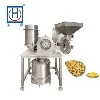
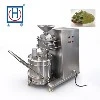
There are four factors that affect the crushing effect of the ultrafine crusher:
1. Properties of raw materials: There are many properties of raw materials, such as brittleness, toughness, fiber, sugar, and oil. Before crushing, the properties of the raw materials should be determined, and different methods should be adopted for materials with different properties. For example, high sugar and high oil materials can be bonded together without external force, so the method of crushing brittle materials cannot be used.
2. The moisture content of raw materials is highly required by ultrafine crushers, which generally cannot exceed 10%. The finer the powder, the more water will be released, increasing the specific gravity of the material and causing multiple particles to stick together. If the material has a high moisture content, it will increase the difficulty of crushing, resulting in a decrease in production.
3. Equipment maintenance, regular maintenance of equipment is a guarantee for the service life of the crusher and the output of the ultrafine crusher for crushing fineness. The equipment needs to be regularly filled with lubricating oil, and the aging degree of each seal and the wear of the crushing medium should be checked.
4. Feed fineness. No matter which manufacturer you purchase, the instructions for use will definitely indicate the feed fineness, which is generally below 1mm. If the feed fineness is too large, it has a significant impact on the lifespan of the machine and it is also very difficult to crush. In fact, this principle is the same as when we eat, we must chew and swallow slowly to aid digestion.
According to the characteristics of aquatic animals and the requirements of their living environment, in order to ensure optimal feed utilization and reduce feed pollution to the water environment, feed should be more easily digested and absorbed. This is even more important for aquatic feed, as many aquatic animals do not have a stomach and have short intestines, and their digestion ability is much lower than that of livestock and poultry. The demand for raw material particle size varies among different aquatic animals and different growth periods.
After crushing, the average particle size of the material is about 1.2mm~1.5mm. When using a 1mm sieve, the average particle size of the crushed material is about 0.5mm~0.6mm. This type of crushing particle size can only meet the requirements of larger adult fish feed, while finer crushing particle sizes can cause poor discharge or screen blockage. Currently, the crushing section of aquatic feed generally uses a vertical sieveless ultrafine crusher for raw material crushing, Improving the production capacity of vertical sieveless ultrafine crushers is of great significance for enterprises producing aquatic feed.