

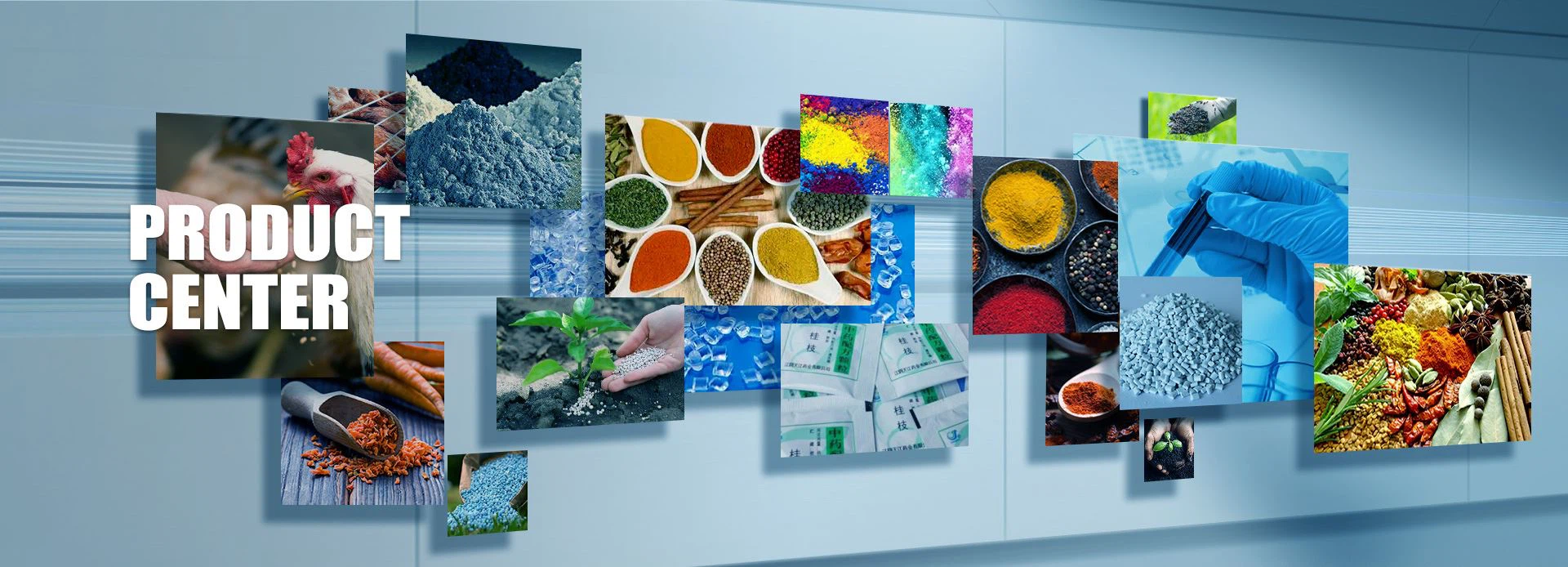
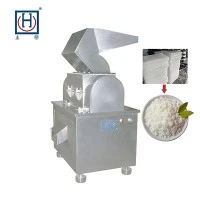
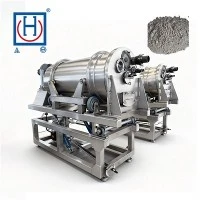
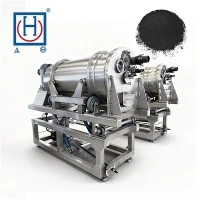

Wet Granulator
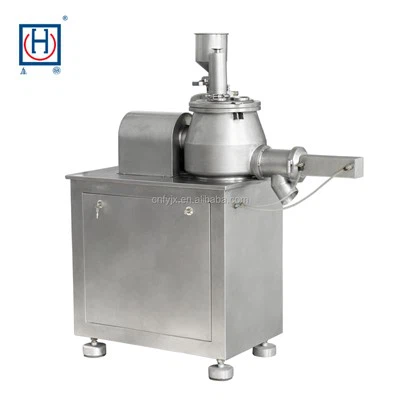
Wet granulation is a process that involves combining different particles of powder together using liquid solutions and adhesives. In the wet granulation process, you will need a non- toxic and volatile granulating fluid to mass the powder particles.
Advantages of Wet Granulator
Better flow properties
Wet granulation modifies the properties of formulation ingredients to overcome their tableting deficiencies. Granules formed are relatively more spherical than the powders and have better flow properties.
Reduce machine wear
Improved compressibility of powders resulting from wet granulation process allows the use of low pressure during compression. This reduces machine wear and thus improves the life of the machine.
Reduce variability
Wet granulation prevents segregation of components of a homogenous powder mix during processing, transferring, handling and/or storage, leading to reduced intra- and inter-batch variability.
Reduce cross contamination
Wet granulation reduces the level of dust present during manufacturing process thereby reducing the incidence of cross-contamination and risk to workers.





Why Choose Us

Factory
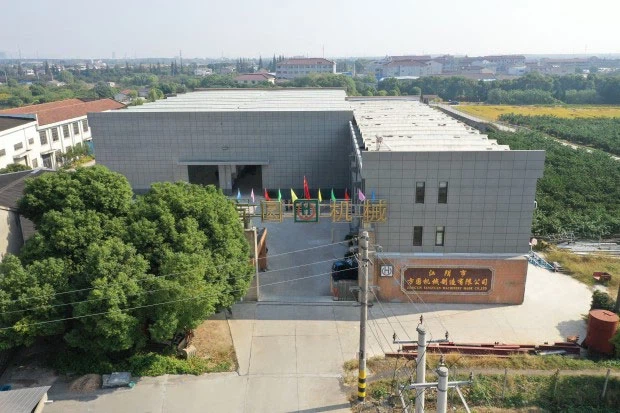
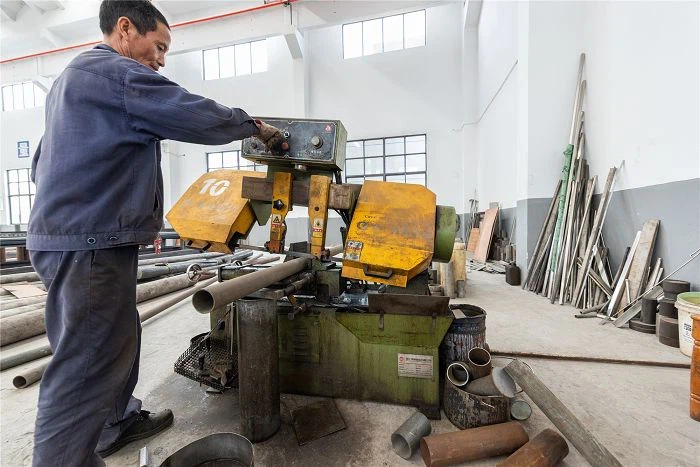
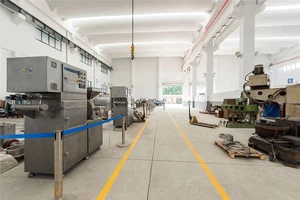
Our company covers an area of 15,000km2, including a building area of 6,000km2. We have more than 100 employees.

24h online service
We are happy to help our customers at any time as we have dedicated and hardworking service back end team working 24 hours.
Rich technical experience
Our staff are some of the most experienced in the industry, providing product-correct advice and solutions, ensuring we provide our customers with technical expertise and service.

Strict quality control
All machines undergo rigorous quality control at the factory to ensure that the quality of the machines we supply meets one of the highest standards.
Types of Wet Granulator
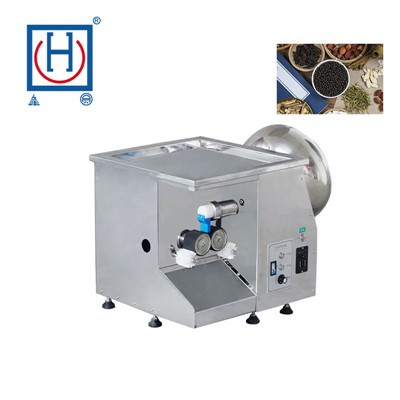
Swing granulator
Swing Granulator uses mechanical transmission to make the drum swing 360° to and fro, extruding materials from the screen into particles or crushing to make particles.When it rotates to 360 °, it will start to move in the opposite direction.The screen is wrapped around the support tube, and by rotating the support tube, the tightness and relaxation of the screen can be adjusted, and the gap between the screen and the granulation knife can also be adjusted according to your fineness requirements and material characteristics.
Ring mold feed pellet machine
A ring mold feed pellet machine is a type of machinery that includes a motor, lubrication system, feeder, regulator, press roller, and so on. Its basic idea is to feed raw materials into the ring mold feed pellet machine through the feeder after they have been ground, combined, cooked, and through other processes. The raw materials are compressed into the ring mold after entering the ring mold feed pellet machine. They are then extruded into pellets through the ring mold hole, and the production process is finished when the cutting knife cuts the raw materials into particles of a specific length.
Ring mould pellet machine
Ring Mould Pellet Machine is widely used in granulation of various biomass particles, including wood waste, straw, rice husk, reed grass, potato, etc., in various fields have applications, such as biomass fuel, animal feed and so on. In addition, the ring mould pellet machine can also be used to create a mixture and building templates and other fields.
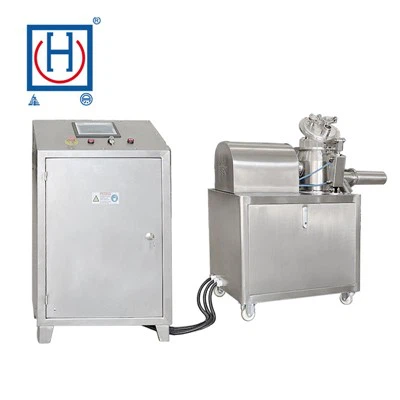
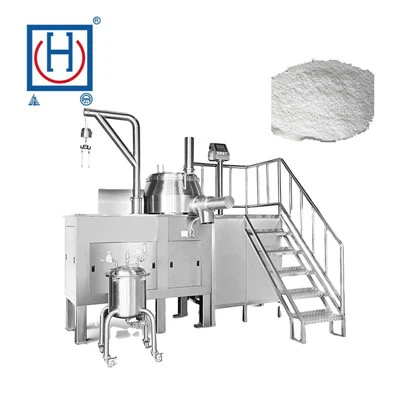
High efficiency wet granulator
Its working principle is very easy.When you use the machine to granulate,firstly, add the powdered material from the conical hopper, then close the lid, start the mixing engine, and the stirring paddle begins to work. At the same time, all powder materials collide and rotate with the conical wall surface, resulting in a more uniform mixing effect.

How do Wet Granulator Produce Denser and Uniform Granules?
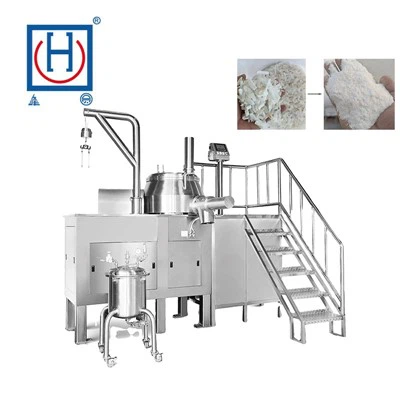
Wet granulators produce uniform and denser particles through the process of agglomeration.
Agglomeration involves particle size enlargement, where small particles become larger, permanent and stable aggregates.
Despite the numerous processes, you can still be able to identify the original particles making up the granules.
The adhesive force that keeps the particles bound together increases with the binder or mechanical energy.
You can either use dry or wet agglomeration to produce uniform and dense granules.
Dry agglomeration involves compacting initial particles into large pellets using pressure and then shredding to smaller sizes.
Wet agglomeration involves the introduction of a binding agent to create liquid bridges among the particles.
After drying the granules, it will leave the bridges intact thus leading to the formation of uniform and dense granules.
What Should You Consider When Choosing Wet Granulator?
Dimensions of the Machine
This includes the size of the machine as well as other machine components such as diameter and effective lengths.Apart from that, you should look at the net weight of the machine.
Operating Speed
It involves looking at the rotor speed or speed of rotation of the machine.This will allow you to know how much granules you can make within a specific time.
Capacity of the Machine
The capacity of the machine will dictate the amount of raw materials that you can use in the granulation process.Apart from that, it will also dictate the number of granules the machine can produce within a specific time frame.
Level of Automation
There are different types of machines with different automation levels such as manual or automatic wet granulators.You should go for the automatic wet granulator machines with PLC control systems even though it might cost more.

Wet Granulator Construction Description
The Wet Granulator is an independent rectangular parallelepiped that is made up of three main components: the bearing frame, the reduction box, and the machine base. The bearing frame and the feeding powder hopper are joined and the feeding powder hopper protrudes from the machine. The machine base's front end is made to protrude and land wide and steadily, so it can be placed inside at will without needing to be installed.

Equipment for producing particles
The rotary drum is positioned horizontally beneath the hopper, and bearing supports are located at the front and back. Through the rack's transmission, it spins both in the backward and forward directions. On the end face, the front bearing seat is moveable. Three screws must be undone in order to remove the rotating drum and the front bearing seat during assembly and disassembly. The revolving drum's two ends use symmetrical convex couplings, which are simple to build and disassemble and are not hindered by reverse rotation.
Screen clamping pipe
Two ends of the screen are inserted into a steel pipe with a long groove in the middle, which is installed on both sides of the revolving drum. Turn the hand wheel to manually wrap the screen around the rotating drum's outer circle. A spur wheel supports the inner wheel block, and the tightness can be changed.
Reduction box
Worm gear transmission with a 1:30 speed ratio is used in the reduction box. To keep the gear rod, gear, and worm gear well oiled and silent, the machine can be placed in a box. An eccentric rod that drives the gear rod to reciprocate is attached to the worm gear's outer end. When the gear shaft and gear rod move together, the gear rod will rotate in the opposite direction.
Machine seat motor
The nut is hinged to one end of the motor mounting plate, which is attached to the machine base. The screw rod is adjusted to rotate when the machine base's hand wheel is cranked, and the nut moves the motor plate up and down to change the V-belt's tension.
Certifications
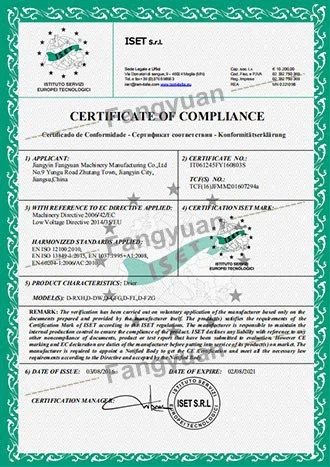
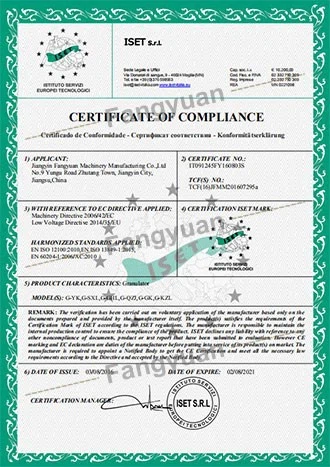
With rich experiences and consistent quality,kept qualifying the Chinese Enterprise with "AAA" credit rating and contract compliance, passed ISO9002 in 2003 got CE certificated in 2010, always led the powder and granules equipment market with dozens of patents.



Our Factory
Our company covers an area of 15,000km2, including a building area of 6,000km2. We have more than 100 employees.

FAQ