How to dry probiotics? The complete production process from fermentation to freeze-dried granules
As probiotic products are increasingly used in the food, health food, and biopharmaceutical sectors, how to maintain the bacterial viability as much as possible during the production process has become a key concern for manufacturers.
Probiotics are different from ordinary chemical powders and are sensitive to temperature, moisture, and storage conditions. Therefore, in the production process, simple use of ordinary high-temperature drying is not feasible; instead, appropriate dehydration and post-treatment processes need to be selected based on the characteristics of the strain.
Currently, vacuum freeze-drying is one of the commonly used drying methods for high-value probiotic products.
Why do probiotics need to be dried at low temperatures?
The core value of probiotics lies in the number and activity of viable bacteria. If they are exposed to high temperatures for a long time during the drying process, it may have adverse effects on the bacteria.
Freeze-drying uses a completely different dehydration method.
First, the probiotic material is frozen, and then in a vacuum environment, the ice directly transforms from solid state to water vapor, thus completing dehydration at a lower temperature.
This method can reduce the impact of high temperatures on the bacteria, making it particularly suitable for probiotic products that require high activity retention.
Complete production process of probiotics
A typical production process for freeze-dried probiotic powder can be represented as:
Fermentation → Concentration → Mixing → Pre-freezing → Vacuum freeze-drying → Grinding → Screening → Packaging
If the final product is required to be in granular form, a further granulation process can be added:
Fermentation → Concentration → Mixing → Freeze-drying → Grinding → Mixing → Granulation → Low-temperature drying → Screening → Packaging
The specific processes for different products may vary and need to be adjusted according to the strain, formula, and requirements of the final product.
1. Fermentation
First, the probiotics are cultivated using fermentation equipment to obtain the required concentration of bacterial liquid.
This stage mainly uses:
Fermentation tanks / Culture tanks
After fermentation, the subsequent separation or concentration is carried out according to the product process.
2. Concentration
To reduce the moisture load in the subsequent freeze-drying process, some production processes will concentrate the bacterial liquid.
Depending on the specific material, the following can be selected:
Membrane concentration equipment, centrifugal equipment, or other suitable concentration equipment.
Not all probiotic products must have this process.
3. Adding protectants and ingredients
During freeze-drying, the bacteria need certain protection, so a corresponding protection system is usually added according to the specific strain and formula.
This stage mainly uses:
Mixing tanks / Stirring tanks
Through thorough mixing, the bacteria are uniformly dispersed with the protection system.
4. Pre-freezing
After the ingredients are completed, the material enters the pre-freezing stage.
By lowering the temperature of the material, water forms ice, creating conditions for subsequent vacuum sublimation.
Some industrial freeze-drying machines have pre-freezing functions, so a separate pre-freezing equipment may not be necessary.
5. Vacuum freeze-drying
This is the core环节 of the entire production process.
After freezing, the material enters the vacuum freeze-drying machine for sublimation drying.
The process usually consists of:
Pre-freezing → One-time drying → Two-time drying
The first drying mainly removes the ice in the frozen state, and the second drying further reduces the residual moisture.
Compared to ordinary hot air drying, freeze-drying places greater emphasis on protecting the product's activity.
Is the freeze-dried product always granular?
Not necessarily.
After freeze-drying of probiotics, they usually obtain freeze-dried blocks, freeze-dried cakes, or freeze-dried powder, and do not naturally form regular granules.
If the customer ultimately requires probiotic granules, a subsequent granulation process must be added.
Common process:
Freeze-drying → Grinding → Mixing → Granulation → Low-temperature drying → Sieving
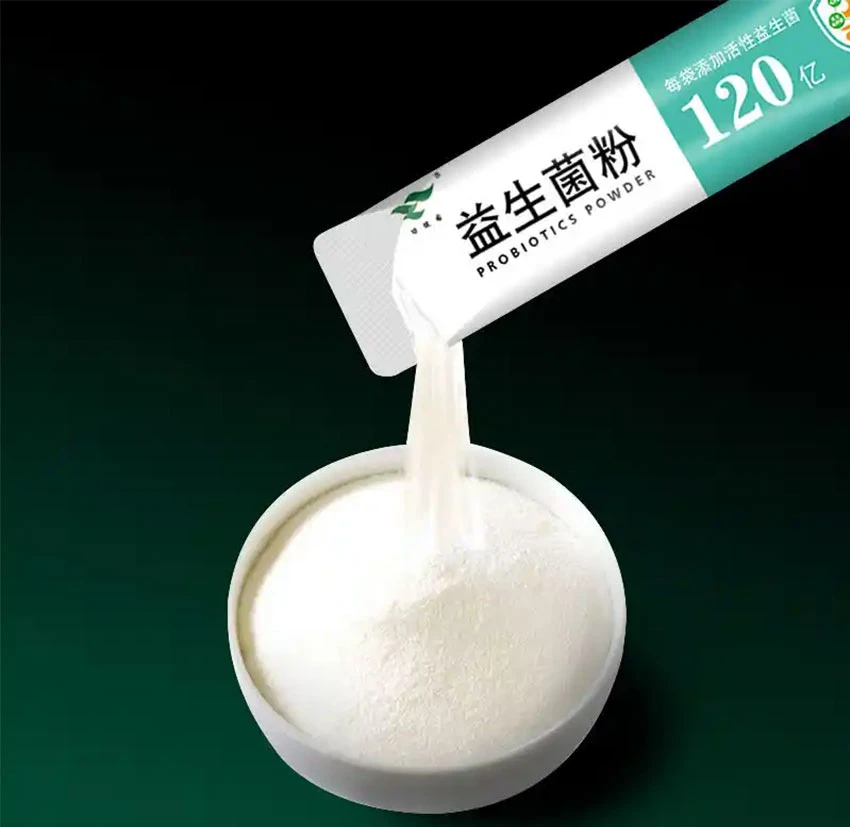
It should be noted that probiotics are a special type of bioactive material. The subsequent drying after granulation also requires control of temperature and residence time. The specific process should be determined through strain and formula experiments rather than directly following the drying parameters of ordinary pharmaceutical granules.
The drying solution for probiotics from Fangyuan Machinery
For probiotic manufacturers, the drying equipment is not simply "removing moisture". What is more important is to achieve the target moisture content while minimizing the impact on the activity of the bacteria.
Fangyuan Machinery can design corresponding drying equipment solutions based on the customer's material characteristics, processing volume, final moisture content, product form, and production process requirements.
For production lines that produce probiotic freeze-dried powder as the final product, key equipment such as vacuum freeze-dryers and supporting grinding, sieving, and packaging equipment can be configured.
If the final product requires probiotic granules, additional equipment such as mixing, granulation, and low-temperature drying can be added after freeze-drying to form a complete production process route.
Conclusion
The core of drying probiotics is not merely about achieving a high drying speed, but rather it requires comprehensive consideration of the viability rate of live bacteria, the final moisture content, the product form, storage stability, and production efficiency.
For high-value probiotic products, vacuum freeze-drying can provide a gentle dehydration environment; for products that ultimately need to be granulated, a combination of granulation and low-temperature drying processes is required.
Fangyuan Machinery will, based on different probiotic materials and production needs, provide customers with solutions ranging from single equipment to complete drying processes, helping customers establish a more stable and reasonable probiotic production process.
To learn more about our Fangyuan products, please click this link :https://www.fine-mill.com/products.
Our WhatsApp:+86 15896498575
E-mail:info@cnfyjx.com