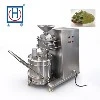
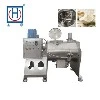
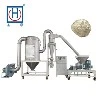
Why Use Liquid Nitrogen Cryogenic Grinding for Probiotic Powder?
As the probiotic industry continues to grow, more manufacturers are paying attention to what happens after freeze drying. Getting the moisture out is only one part of the process. Once a probiotic freeze-dried block needs to be turned into powder, the grinding step can also affect the final product.
This is where liquid nitrogen cryogenic grinding becomes an interesting option.
What Happens When Probiotic Freeze-Dried Blocks Are Ground?
After vacuum freeze drying, probiotics are often obtained as dry, porous blocks or cakes. These materials are relatively brittle and can be broken down into powder.
The problem is that mechanical grinding generates heat.
During conventional pulverization, the material is subjected to impact, friction and shear. As production capacity increases or grinding takes longer, the temperature inside the grinding chamber can also rise.
For ordinary materials, this may not be a major concern. For probiotics, it deserves more attention because the product contains living microorganisms.
Why Does Temperature Matter?
Probiotic products are generally sensitive to processing conditions. Excessive heat during grinding may have an unfavorable effect on product stability and viable cell count.
This does not mean that every probiotic product must use cryogenic grinding. Some freeze-dried probiotic materials are brittle enough to be processed with a conventional or low-temperature pulverizer.
However, when temperature rise becomes a concern, liquid nitrogen cooling provides another option.
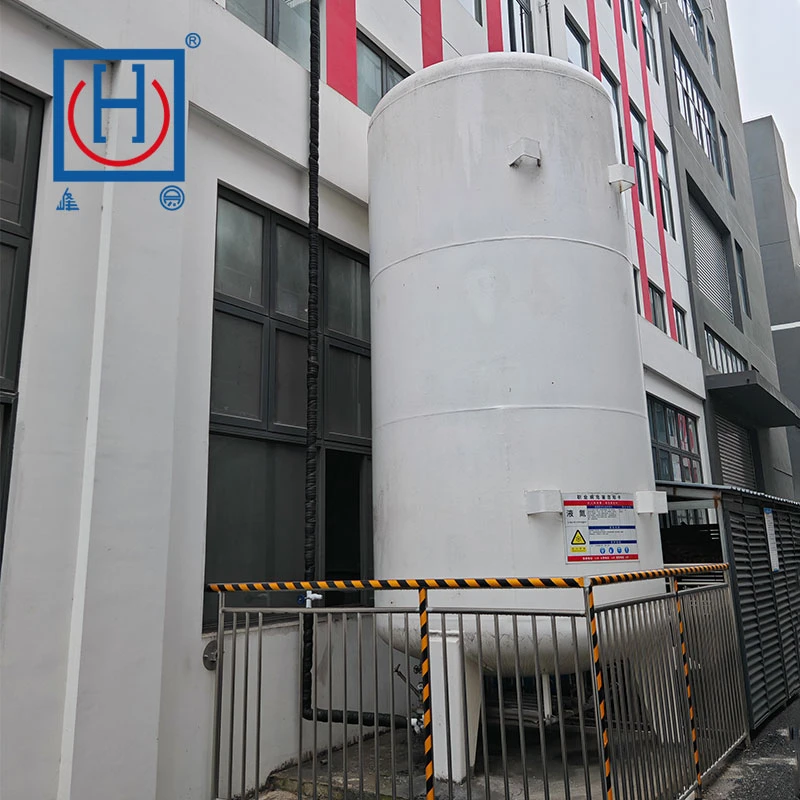
How Does Liquid Nitrogen Cryogenic Grinding Work?
The basic idea is straightforward.
The probiotic material is cooled to a low temperature using liquid nitrogen before or during the grinding process. At low temperatures, the material becomes more brittle and easier to break.
At the same time, the low-temperature environment helps offset the heat generated by mechanical grinding.
The process can be summarized as:
Freeze-Dried Probiotic Block → Liquid Nitrogen Cooling → Cryogenic Grinding → Sieving → Probiotic Powder
The exact cooling temperature and liquid nitrogen consumption depend on the material, equipment configuration and production conditions.
What Are the Benefits?
Lower Temperature During Grinding
The biggest reason to consider cryogenic grinding is temperature control. Liquid nitrogen can rapidly absorb heat generated during pulverization, helping maintain a lower grinding temperature.
Easier Grinding of Brittle Materials
Freeze-dried probiotic blocks are already relatively brittle. Cooling them further can make them easier to fracture, which may improve grinding efficiency for certain materials.
Better Control of Fine Powder
With the appropriate pulverizer and screen configuration, the process can produce a relatively uniform powder suitable for subsequent screening and packaging.
Suitable for Heat-Sensitive Products
The same principle can be applied to other temperature-sensitive biological or food materials where excessive grinding heat is undesirable.
Does Every Probiotic Powder Need Liquid Nitrogen? No.
This is an important point when selecting equipment.
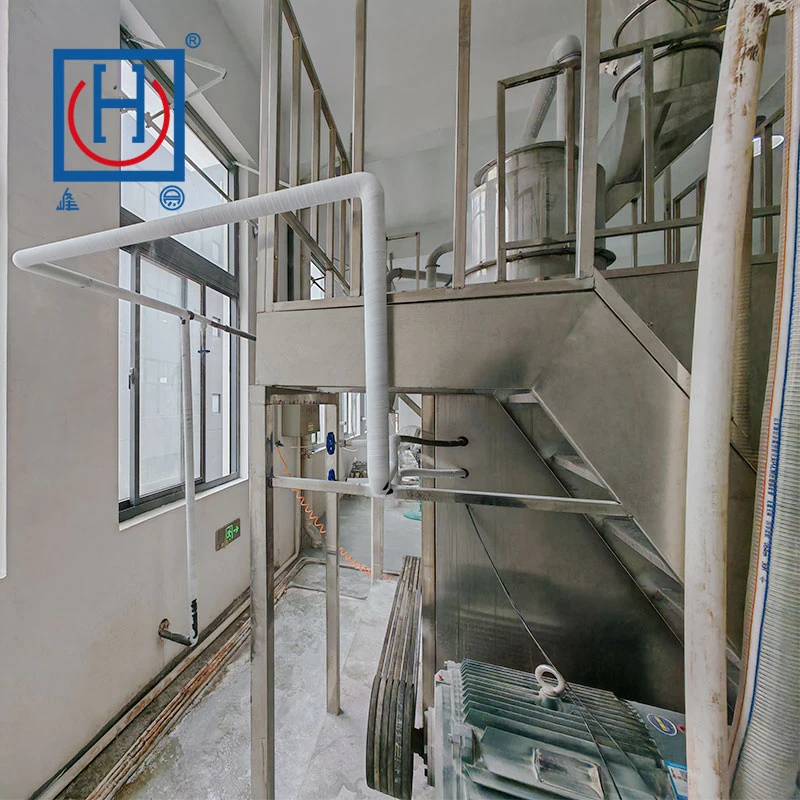
If a probiotic freeze-dried material can be ground at a controlled temperature using a conventional low-temperature pulverizer, there may be no need to introduce liquid nitrogen.
Cryogenic grinding becomes more attractive when:
The material is particularly heat-sensitive
Grinding causes noticeable temperature rise
A finer powder is required
The material becomes sticky or difficult to grind as temperature increases
Stable grinding conditions are difficult to maintain
The customer has strict temperature-control requirements
The right choice should be based on actual grinding trials rather than simply choosing the most complicated process.
For probiotic powder, the grinding stage should not be treated simply as a size-reduction process. Temperature control matters just as much as grinding efficiency.
Liquid nitrogen cryogenic grinding provides a practical way to keep the material cold during pulverization and can be particularly useful for heat-sensitive probiotic products. But it is not automatically the best choice for every application.
Fangyuan Machinery can select and configure the appropriate low-temperature or cryogenic grinding solution according to the customer's actual probiotic material and production requirements.
To learn more about our Fangyuan products, please click this link :https://www.fine-mill.com/air-classifier-mill/low-temperature-pulverizer-for-probiotics.html.
Our WhatsApp:+86 18115325508
E-mail:johnson@cnfyjx.com