


A journey through the technology of transforming dirty eggs into clean ones
Eggs, as an essential source of high-quality protein in daily diets, their safety and hygiene standards directly affect the health of consumers. However, along the chain from the farm to the table, the surface of eggs may be contaminated with feces, feathers, dust and other pollutants. Traditional manual cleaning is inefficient and poses a risk of secondary pollution. At this point, the emergence of egg cleaning and drying assembly line processing plants has redefined the egg cleaning process in an industrialized and standardized manner, becoming an important part in ensuring food safety.
1. The core function of the assembly line factory: Full-process automated cleaning
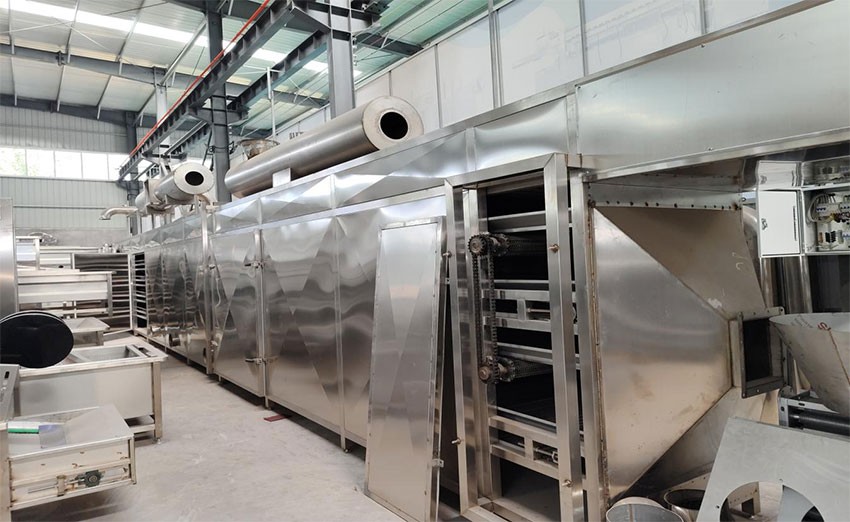
The egg cleaning and drying production line achieves the transformation from dirty eggs to clean eggs through multi-stage collaborative operations. First, the eggs are automatically sorted onto the conveyor belt and enter the pre-cleaning stage, where they are initially washed with high-pressure water to remove surface impurities. Then they move to the brush cleaning area, where soft silicone brushes combined with gentle cleaning remove stubborn stains. The eggs after cleaning need to be sprayed with clean water and then dried by a hot air drying system to quickly remove surface moisture and prevent bacterial growth. The entire process does not require manual contact, which not only improves efficiency but also reduces the risk of cross-contamination.
II. Technical Highlights: Precise Control and Security Assurance
Dual control of temperature and pressure: The water temperature for cleaning is usually maintained at 35-40℃, which can effectively remove stains while avoiding cracking of the eggshell due to high heat; the rotational speed and pressure of the brush have been repeatedly adjusted to ensure sufficient cleaning power without damaging the eggshell membrane - this natural protective layer is crucial for preventing bacterial invasion.
2. Dual protection through ultraviolet sterilization and ozone disinfection: Some production lines add ultraviolet irradiation or ozone circulation steps after drying, further eliminating any remaining microorganisms on the eggshell surface. Research shows that eggs that have undergone standardized cleaning and disinfection have a 90% or greater reduction in the detection rate of Salmonella.
3. Intelligent sorting and defect detection: Modern production lines are equipped with high-precision cameras and sensors, which can automatically identify cracked eggs, deformed eggs, or eggs with excessive stains, and remove them to the scrap area, ensuring that the product qualification rate at the factory is close to 100%.
III. Industry Impact: From Food Safety to Industrial Chain Upgrading
Promoting standardized egg production: Traditional loose eggs, due to varying cleanliness levels, were difficult to enter regular channels such as supermarkets. The widespread adoption of assembly-line processing plants enabled eggs to be uniformly cleaned, dried, labeled (with production dates and traceability information), and even packaged by grades, meeting the modern consumers' demands for food safety and quality.
2. Reducing food waste: According to statistics, the loss rate of uncleaned eggs due to surface stains or damage can reach 15%-20%. However, through automated processing, the loss can be controlled within 5%, which not only saves resources but also reduces the costs for farmers and processing enterprises.
3. Promote coordinated development of the industrial chain: The cleaning and drying production line usually forms a closed loop with egg grading, packaging, and cold chain transportation processes, facilitating the transformation of the egg industry from a "conventional" model to a "refined" one, and providing technical support for rural revitalization and agricultural modernization.
The egg cleaning and drying assembly line factory is not only a combination of technology and food safety, but also a microcosm of modern agricultural industrialization. It replaces the randomness of manual work with the precision of machinery, and replaces the vagueness of experience with the controllability of data, ensuring that every egg can reach millions of households in a safer and cleaner state. The next time you crack open a crystal-clear egg, why not think about the silent operating system behind it - it is precisely these "invisible guardians" that make our dining table more reassuring. If you are interested in food processing technology, you might as well pay more attention to these industrial solutions and explore how technology can reshape the future of traditional agriculture!
To learn more about our Fangyuan products, please click this link :https://www.fine-mill.com/products.
Our WhatsApp:+86 18115325508
E-mail:Johnson@cnfyjx.com


