





Poultry Feed Machine
Introduce
Poultry feed machines are essential equipment used in the production of feed for poultry, including chickens, ducks, geese, and turkeys. These machines play a crucial role in processing raw materials into nutritious and balanced feed that meets the dietary requirements of various poultry species at different stages of growth. Here's an introduction to the main components and functions of poultry feed machines:
Main Components:
Feeding System: The feeding system is responsible for transferring raw materials such as grains, protein sources, vitamins, and minerals into the machine for further processing.
Grinding System (for feed grinder mixers): In feed grinder mixers, the grinding system is used to crush and grind raw materials into smaller particles, making them easier to process and digest for poultry.
Mixing System: This system ensures thorough blending of different ingredients to create a uniform mixture, promoting consistency in nutrient distribution throughout the feed.
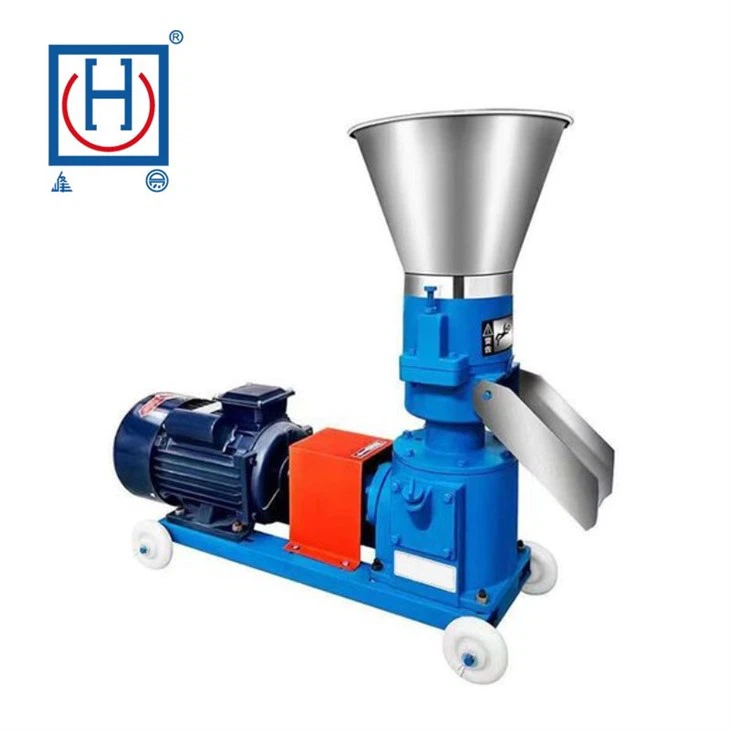
Pelletizing System: Poultry feed pellet machines compress the mixed ingredients into dense, durable pellets of specific sizes and shapes, enhancing feed quality and digestibility.
Cooling and Screening System: After pelletization, the pellets go through a cooling process to reduce their temperature and moisture content, followed by screening to remove fines and ensure uniform pellet size.
Control System: Modern poultry feed machines are equipped with control systems that regulate the entire production process, allowing for precise adjustment of parameters such as feed formulation, pellet size, and production capacity.
Functions:
Feed Processing: Poultry feed machines are designed to process a wide range of raw materials, including grains, oilseeds, by-products, and additives, to produce complete feed that meets the nutritional needs of poultry.
Feed Formulation: These machines facilitate the precise mixing and proportioning of various ingredients to create balanced feed formulations tailored for different stages of poultry growth and development.
Pellet Production: Poultry feed pellet machines transform the mixed feed into pellets, which offer advantages such as reduced feed wastage, improved feed conversion, and convenient handling and storage.
Quality Control: Through the use of advanced control systems, poultry feed machines ensure consistent quality and uniformity in feed production, contributing to the overall health and performance of poultry.

Working principle
The working principle of a poultry feed machine involves several key processes to transform raw materials into high-quality feed. Here's a general overview of the typical working principle:
Feeding and Conveying: The process begins with the feeding system, which conveys raw materials such as grains, protein sources, vitamins, and minerals into the machine. This may involve the use of augers, conveyors, or other feeding mechanisms to transport the raw materials to the next stage of processing.
Grinding and Crushing (if applicable): For feed grinder mixers, the raw materials may undergo grinding and crushing to reduce their particle size, making them easier to process and digest for poultry. This step involves the use of a grinding system to achieve the desired particle size reduction.
Mixing: The raw materials are then directed to the mixing system, where they are combined in precise proportions to create a uniform mixture. This ensures that all essential nutrients are evenly distributed throughout the feed, contributing to balanced nutrition for the poultry.
Pelletizing (if applicable): In the case of poultry feed pellet machines, the mixed ingredients are processed through a pelletizing system. This involves compressing the mixture into dense, durable pellets of specific sizes and shapes using a pellet mill or pelletizing equipment. This step enhances feed quality, improves digestibility, and facilitates convenient handling and storage of the feed.
Cooling and Screening (if applicable): After pelletization, the pellets may go through a cooling process to reduce their temperature and moisture content, promoting stability and shelf life. Following this, the pellets may be screened to remove fines and ensure uniform pellet size for consistent feed quality.
Packaging and Distribution: The final processed feed, whether in pellet or mash form, is then packaged and prepared for distribution to poultry farms and facilities.

FAQ
1. Q: What types of poultry feed machines are available?
A: Poultry feed machines come in various types, including feed pellet machines, feed grinder mixers, feed extruders, and feed pellet coolers. Each type is designed to perform specific functions in the feed production process.
2. Q: What are the key features to consider when selecting a poultry feed machine?
A: Important features to consider include capacity, power consumption, pellet size and shape options, automation level, durability, and the ability to process a variety of raw materials.
3. Q: Can poultry feed machines handle different types of feed ingredients?
A: Yes, modern poultry feed machines are designed to handle a wide range of ingredients, including grains, protein sources, vitamins, minerals, and additives, allowing for the formulation of balanced and nutritious feed for poultry.

Hot Tags: poultry feed machine, China poultry feed machine manufacturers, suppliers, factory, Superfine Powder Grinding Machine, Universal Crusher, Rapid Mixer Granulator, FBD Granulation, Disintegrator Mill, Rotary Granulator
Previous
Animal Feed Making MachineNext
Lab GranulatorYou Might Also Like



Send Inquiry