




Lab Granulator
Introduce
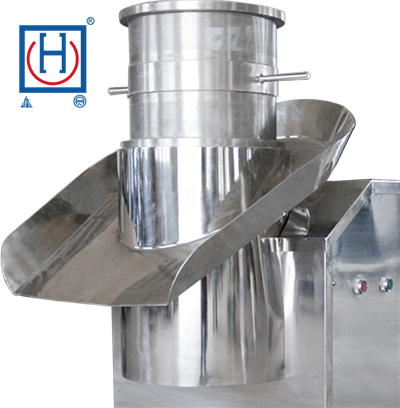
Lab granulator is a common piece of laboratory equipment used to form powder or other materials into pellets. It is commonly used to prepare small batch particle samples for further study and analysis.
Lab granulators use swing motion to convert powder or granular material into pellets. It works by placing powder in a container and then making the container move back and forth in a horizontal direction in a rocking motion. This motion causes the powder to continuously roll and collide inside the container, thus forming a granular structure.

Working principle
Feeding: Place the powder or granular material to be treated in the container of the rocking granulator.
Swing motion: Start the swing granulator and make it move back and forth in the horizontal direction in a swinging manner. This motion causes the material inside the container to constantly roll, collide and rub.
Powder coalescence: When the container shakes, the powder or granular material will gradually coalesce together to form particles. This is because the material is subjected to inertial forces during the rocking process, resulting in interactions between particles, resulting in the formation of a granular structure.
Particle formation: As the rocking continues, the coalesced powder or particles will be further compacted and consolidated to form a more stable particle structure. The size and shape of the particles can be controlled by adjusting the rocking speed, container Angle and other parameters.
Completion of granulation: When the desired particle size and shape are reached, the rocking movement is stopped to complete the particle preparation process.

Technical parameters
| Single Head Granulator Technical Parameters | |||
| Model | YK-100 | YK-160 | YK-160B |
| Production Capacity(kg/h) | 30-200 | 100-300 | 100 |
| Power(kw) | 1.5 | 3 | 5.5 |
| Roller Speed(rpm) | 65 | 55 | 55 |
| Swing Angle(360°) | 360° | 360° | 360° |
| Roller Diameter(mm) | 100 | 160 | 160 |
| Dimensions(mm) | 700*400*1050 | 1000*800*1300 | 100*800*1300 |
| Weight(kg) | 280 | 380 | 450 |
| Double Head Granulator Technical Parameters | ||||
| Model | YK-100 | YK-160 | YK-200 | YK-320 |
| Production Capacity(kg/h) | 150-400 | 300-600 | 350-1000 | 350-1300 |
| Power(kw) | 4 | 5.5 | 7.5 | 11 |
| Roller Speed(rpm) | 55 | 55 | 50 | 45 |
| Swing Angle(360°) | 360° | 360° | 360° | 360° |
| Roller Diameter(mm) | 100 | 160 | 200 | 320 |
| Dimensions(mm) | 1050*800*1300 | 1100*900*1350 | 1200*1050*1500 | 1858*1100*1200 |
| Weight(kg) | 420 | 650 | 850 | 1100 |
Features and Advantages
Lab granulator has the following features and advantages:
Easy to use: The operation is simple and does not require complex Settings and adjustments.
Strong controllability: the size and shape of the particles can be controlled by adjusting the rocking speed, container Angle and other parameters.
Time and cost savings: Compared to other granulation methods, laboratory swing granulators are usually able to complete particle preparation in a shorter time and do not require additional cost inputs.
Wide applicability: It can handle various types of powder or granular materials, including drugs, chemicals, food raw materials, etc.
Good repeatability: Due to the simple operation and adjustable parameters, the lab granulator provides good particle consistency and repeatability.
Operation precautions
The following points need to be noted when using the lab granulator:
The appropriate containers and fittings need to be selected to ensure that the containers can hold the materials required to be handled.
According to the characteristics and requirements of the material, select the appropriate rocking speed and container Angle parameters.
Pay attention to safety precautions during operation to avoid accidents.
Clean and maintain equipment to ensure proper operation and extend service life.
In short, the lab granulator is a commonly used laboratory equipment, suitable for the preparation of small batches of particle samples. It has the advantages of simple use, strong controllability and wide applicability, and is one of the important tools for particle preparation and research in the laboratory.
FAQ
1. Q: What is the lab granulator?
A: Lab granulator is a type of equipment used in laboratory settings for the granulation process. It is designed to transform powders or other materials into granules, which are more easily handled and processed.
2. Q: What are the common applications of lab granulators?
A: Lab granulators are commonly used in various industries and research facilities for applications such as pharmaceutical development, chemical synthesis, food processing, and material science. They are used to produce granules for further analysis, formulation studies, or small-scale production.
3. Q: Can lab granulators handle different types of materials?
A: Lab granulators are versatile and can handle a wide range of materials, including pharmaceutical powders, chemicals, food ingredients, and even certain materials like plastics or metals. However, it is important to consider the specific requirements of each material and select a granulator that is suitable for the intended application.

Hot Tags: lab granulator, China lab granulator manufacturers, suppliers, factory, Fish Feed Pellet Dryer, High Efficient Vibrating Sifter Machine, Universal Crusher, Vibrating Flour Sifter, Double Shaft Swing Granulator, High Efficient MIill
Previous
Poultry Feed MachineYou Might Also Like



Send Inquiry