What is the difference between ribbon and paddle blenders?
Introduction:
Ribbon blenders and paddle blenders are both widely used in the food, pharmaceutical, and chemical industries for mixing dry or moist materials. Despite their similar functions, there are distinct differences between these two types of blenders in terms of design, mixing efficiency, and suitability for specific applications. In this article, we will delve into these differences in detail to provide a comprehensive understanding of ribbon and paddle blenders.
Design:
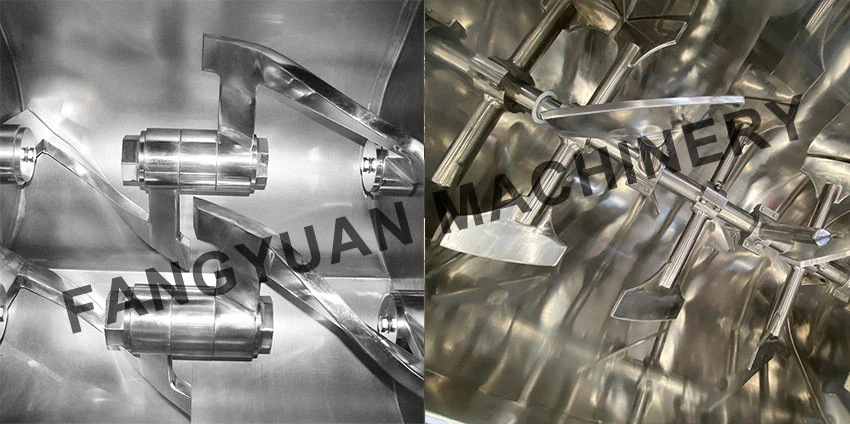
One of the most notable differences between ribbon and paddle blenders lies in their design. Ribbon blenders are characterized by a large, U-shaped horizontal trough with a single or double helical ribbon agitator. The ribbon agitator consists of a set of inner and outer helical blades that continuously rotate to move materials in both axial and radial directions, ensuring consistent blending. On the other hand, paddle blenders feature a cylindrical vessel with a series of paddles attached to a horizontal shaft. These paddles rotate at high speeds, creating a fluidized mixing motion throughout the vessel.
Mixing Efficiency:
Mixing efficiency is an essential consideration when choosing between ribbon and paddle blenders. Ribbon blenders are known for their gentle and thorough mixing. The helical ribbon agitator creates a more balanced and controlled motion, preventing material segregation and ensuring a homogeneous blend. The radial and axial movement of the ribbon agitator promotes a faster blending process, particularly for dry and free-flowing materials. However, ribbon blenders may face limitations when mixing cohesive or sticky materials, as their design does not offer the same level of shear and dispersion as paddle blenders.
Paddle blenders, on the other hand, are designed for more vigorous mixing. The high-speed rotation of the paddles generates intense shear forces and creates intense fluidization, facilitating effective blending of cohesive and sticky materials. The paddles also enhance the dispersion of ingredients, making paddle blenders suitable for applications that require deagglomeration or particle size reduction. While paddle blenders may achieve faster mixing results in certain scenarios, they may not offer the same level of gentle blending as ribbon blenders.
Suitability for Specific Applications:
The choice between ribbon and paddle blenders often depends on the nature of the materials being mixed and the desired outcome. Ribbon blenders are commonly used for mixing dry powders, granules, and free-flowing materials. Their gentle and controlled blending motion makes them suitable for delicate products that require minimal attrition or degradation. Ribbon blenders are widely utilized in industries such as food processing, pharmaceuticals, and chemicals, where maintaining the integrity of the ingredients is crucial.
Paddle blenders, on the other hand, excel in handling cohesive, sticky, or difficult-to-blend materials. Their intense mixing action effectively breaks apart agglomerates, disperses additives, and promotes uniformity in the final product. Paddle blenders are widely used for applications such as blending sticky dough, homogenizing viscous suspensions, or combining ingredients with varying densities. The intensive mixing action of paddle blenders can also facilitate heat transfer, making them suitable for processes that involve thermal treatments.
Versatility and Customization:
In terms of versatility and customization options, both ribbon and paddle blenders offer various features to meet specific requirements. Ribbon blenders can be equipped with different agitator designs, including single or double helical ribbons, allowing customization based on the mixing requirements. The addition of intensifier bars or lump breakers can further enhance the blending of cohesive materials.
Paddle blenders, too, can be customized to suit different applications. The number, shape, and size of the paddles can be adjusted to achieve the desired mixing intensity and fluidization. Additionally, paddle blenders often offer options for the inclusion of spray nozzles for liquid additions or jackets for heating or cooling purposes, expanding their functionality.
Conclusion:
In summary, while ribbon and paddle blenders share similarities in their purpose of blending materials, their distinct designs and mixing efficiencies set them apart. Ribbon blenders provide gentle and homogenous blending, making them suitable for a wide range of dry or free-flowing materials. Paddle blenders, on the other hand, offer more vigorous mixing, effectively handling cohesive and sticky materials. The choice between these two types of blenders depends on the specific characteristics of the materials being mixed and the desired outcome. By understanding the differences between ribbon and paddle blenders, manufacturers can make informed decisions to optimize their mixing processes and achieve the desired product quality.
To learn more about our Fangyuan products, please click this link:https://www.fine-mill.com.